TL;DR

The Hijrah of Prophet Muhammad ﷺ was more than a physical migration—it was a spiritually guided transition that teaches Muslims how to navigate major life changes with sincerity, purpose, and reliance on Allah. As we move from the school year into summer, the Qur’anic duʿāʾ revealed in connection with the Hijrah (Qur’an 17:80) provides a powerful framework:

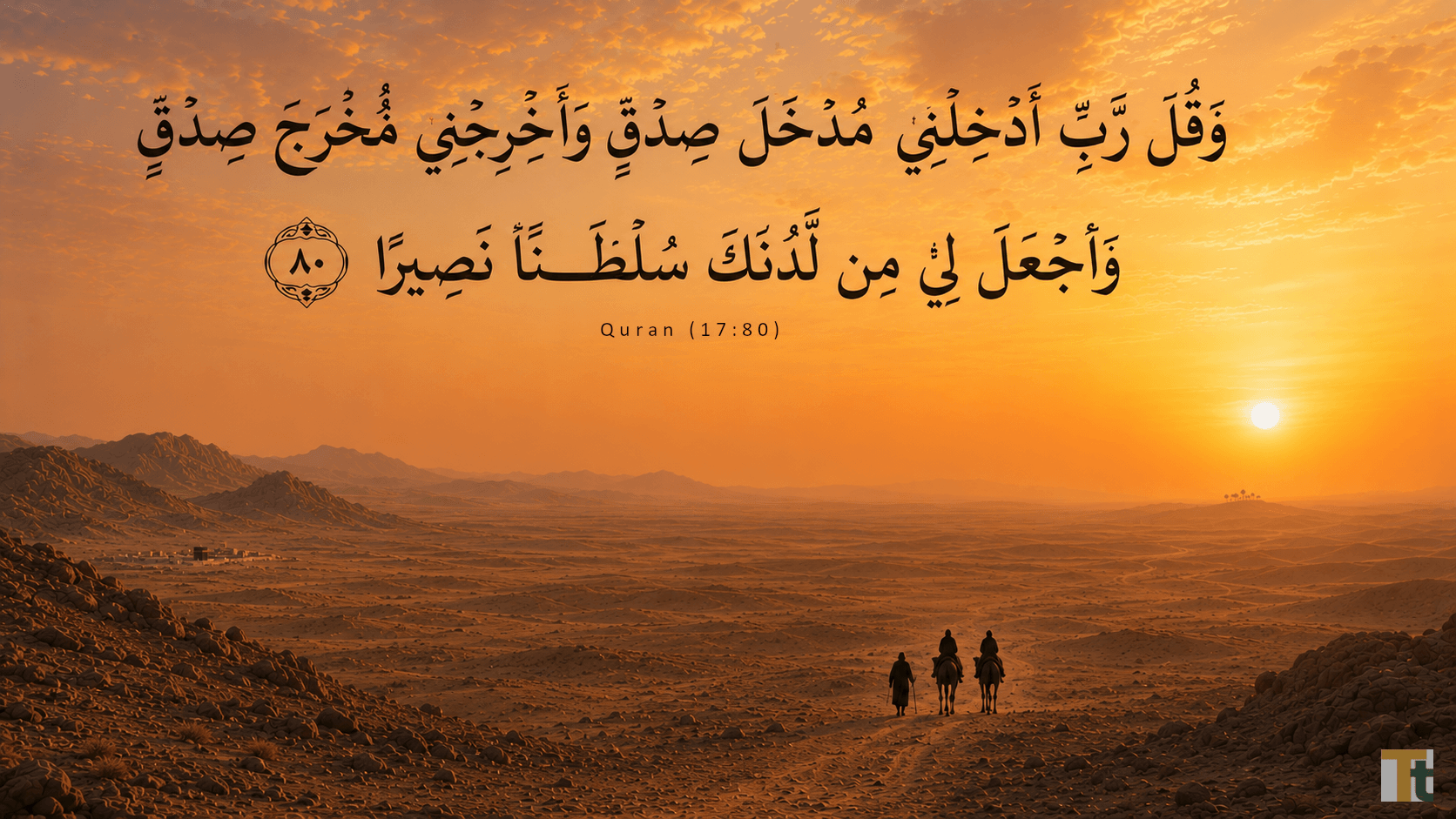
"My Lord! Grant me an honourable entrance and an honourable exit and grant me a supporting authority from Yourself."

Allah did not simply command the Prophet ﷺ to migrate; He taught him to make duʿāʾ first, demonstrating that meaningful transitions begin with preparing the heart before taking action. The surrounding verses highlight three essential anchors during times of change: salah, duʿāʾ, and the Qur’an.

A key lesson from the duʿāʾ is the concept of ṣidq (truthfulness and sincerity)—ensuring that both our departure from one stage of life and our entrance into another are rooted in sincere intentions and actions that please Allah.

For educators, this means:
1. Exiting the school year with integrity by fulfilling responsibilities, resolving conflicts, and leaving on good terms.
2. Entering summer with purpose through spiritual renewal, family connection, reflection, and meaningful goals.
3. Relying on Allah for guidance and success rather than depending solely on planning or personal effort.

For families, this means:
1. Seeking Allah's guidance through du'a
2. Protecting Salah before the schedule changes
3. Making Qur'an the companion for the summer
4. Creating a Technology Plan before screens fill the space
5. Connecting with Allah through the outdoors
6. Learning together through shared experiences

The Hijrah reminds us that every transition is an opportunity for growth and closeness to Allah. When we approach change with sincere intentions, duʿāʾ, and tawakkul, Allah opens the door to greater blessings and success than we can foresee.
Introduction: Why Transitions Matter in Islam and in Life
As another Hijri year begins, we are reminded of one of the most significant moments in Islamic history—the Hijrah of the Prophet Muhammad ﷺ from Makkah to Madinah. This journey, which took place over 1,400 years ago, was not just a physical migration but a turning point that reshaped the future of the Muslim Ummah.
Interestingly, the anniversary of the Hijrah comes at a time when many are also entering a major transition: the end of the school year and the beginning of summer.
While these may seem like two very different contexts, the Qur’anic guidance surrounding the Hijrah offers timeless lessons on how to navigate change with purpose, intention, and reliance on Allah. How we approach transitions determines not only what we leave behind, but also what we are preparing ourselves for.
With the start of another Hijri year, we are reminded of the pivotal journey of our beloved Prophet Muhammad from Makkah to Madinah one thousand four hundred and forty eight years ago. Coincidentally it is coming as we close off another school year and transition into summer. How we navigate this transition can significantly impact what we are heading towards and what we are leaving behind us. The Hijrah of Prophet Muhammad teaches us important lessons that we can use to ensure this transition occurs in a way that is of greatest benefit to us.
The Hijrah: A Time of Hardship Before Relief
Before the Hijrah, the Prophet ﷺ and the early Muslims faced intense and escalating persecution in Makkah. The Quraysh subjected them to physical torture, social isolation, economic boycott, and the loss of tribal protection.
During this period, the Prophet ﷺ also experienced profound personal loss in what became known as the Year of Sorrow, when his beloved wife Khadijah (ra) and his uncle Abu Talib passed away. Seeking support in Ṭāʾif, he was rejected and even stoned until his blessed feet bled.
Despite these hardships, the message of Islam continued to grow. As more people embraced faith, opposition increased, eventually leading the Quraysh to plot the assassination of the Prophet ﷺ.
At this critical moment of pressure and uncertainty, divine guidance came—not as a simple command, but in the form of a powerful duʿāʾ.
The Command to Make Hijrah: A Duʿāʾ, Not Just an Order
Allah instructed the Prophet ﷺ and the believers to migrate. Imam Ahmad recorded that Ibn `Abbas said: The Prophet was in Makkah, then he was commanded to emigrate, and Allah revealed the words:
وَقُل رَّبِّ أَدْخِلْنِى مُدْخَلَ صِدْقٍۢ وَأَخْرِجْنِى مُخْرَجَ صِدْقٍۢ وَٱجْعَل لِّى مِن لَّدُنكَ سُلْطَـٰنًۭا نَّصِيرًۭا ٨٠
And say, “My Lord! Grant me an honourable entrance and an honourable exit and grant me a supporting authority from Yourself.” (17:80)
At-Tirmidhi said, “This is Hasan Sahih.”(Tafsir Ibn Kathir of Surah Al-Isra Verse 80, n.d.).
Although Allah could have directly commanded the Hijrah, He instead framed it as a duʿāʾ, revealing a profound pedagogical strategy. Major transitions are not merely logistical decisions; they are spiritual journeys that require preparation of the heart. By inviting the Prophet ﷺ and the believers to seek guidance through prayer, Allah gently redirected them toward a difficult yet necessary path. The language of duʿāʾ nurtures acceptance, strengthens tawakkul, and transforms reluctant obedience into willing submission. Meaningful change begins with an internal realignment of the heart toward Allah’s wisdom and plan.
The Power of Duʿāʾ in Times of Transition
Leaving Makkah was not easy. It was the birthplace of the Prophet ﷺ, the home of the Kaʿbah, and deeply beloved to the believers. Naturally, leaving such a place would be emotionally difficult—even when it was necessary.
It was difficult for the Prophet and the Muslims to leave Makkah. They loved Makkah. This was not only their ancestral home but also a Holy City that housed the Ka’aba, the first house built to worship Allah (swt). Who had more right to be there and be its caretakers than the Messenger of Allah and those who believed in him? None!
Rather than commanding immediate departure, Allah first taught them to make duʿāʾ for it.
This is where we see the wisdom of divine تربيه (tarbiyah):
Allah prepared their hearts before moving their bodies.
Duʿāʾ, therefore, is not only a request for help—it is an act that aligns the heart with Allah’s decree. It softens resistance, builds acceptance, and transforms hardship into surrender.
For anyone facing uncertainty—whether a career shift, a life change, or even the transition from school to summer—the lesson is clear:
Seek guidance and help from Allah with duʿāʾ before action, and put our tawakkul (trust) in Allah.
The Qur’anic Framework for Navigating Life’s Transitions
The duʿāʾ for Hijrah in Surah Al-Isrāʾ (Qur’an 17:80) is not presented in isolation. Significantly, it is sandwiched between verses emphasizing salah and the Qur’an, revealing a powerful strategy for seeking Allah’s help during times of transition.
Before the duʿāʾ, Allah commands the Prophet ﷺ to establish prayer followed by the encouragement to engage in night prayer:
أَقِمِ ٱلصَّلَوٰةَ لِدُلُوكِ ٱلشَّمۡسِ إِلَىٰ غَسَقِ ٱلَّيۡلِ وَقُرۡءَانَ ٱلۡفَجۡرِۖ إِنَّ قُرۡءَانَ ٱلۡفَجۡرِ كَانَ مَشۡہُودً۬ا ( ٧٨ ) وَمِنَ ٱلَّيۡلِ فَتَهَجَّدۡ بِهِۦ نَافِلَةً۬ لَّكَ عَسَىٰٓ أَن يَبۡعَثَكَ رَبُّكَ مَقَامً۬ا مَّحۡمُودً۬ا ( ٧٩ )
Observe the prayer from the decline of the sun until the darkness of the night and the dawn prayer, for certainly the dawn prayer is witnessed ˹by angels˺. And rise at ˹the last˺ part of the night, offering additional prayers, so your Lord may raise you to a station of praise. (Qur’an 17:78-79).
Immediately after the duʿāʾ, Allah reminds us:
وَنُنَزِّلُ مِنَ ٱلْقُرْءَانِ مَا هُوَ شِفَآءٌۭ وَرَحْمَةٌۭ لِّلْمُؤْمِنِينَ ۙ وَلَا يَزِيدُ ٱلظَّـٰلِمِينَ إِلَّا خَسَارًۭا ٨٢
We send down the Quran as a healing and mercy for the believers, but it only increases the wrongdoers in loss. (Qur’an 17:82).
The placement is intentional. When facing uncertainty, change, or difficult decisions, believers are taught to anchor themselves in three things: salah, duʿāʾ, and the Qur’an. Prayer strengthens our connection with Allah, duʿāʾ expresses our dependence upon Him, and the Qur’an provides the guidance, healing, and clarity needed to move forward with confidence.
This framework echoes Allah’s instruction in Surah Al-Baqarah:
وَٱسْتَعِينُوا۟ بِٱلصَّبْرِ وَٱلصَّلَوٰةِ ۚ وَإِنَّهَا لَكَبِيرَةٌ إِلَّا عَلَى ٱلْخَـٰشِعِينَ ٤٥
And seek help through patience and prayer. Indeed, it is a burden except for the humble—(Quran 2:45)
True tawakkul is not passive resignation; it is actively turning to Allah through consistent worship, patient perseverance, and sincere supplication while taking the necessary steps forward.
Allah then describes those who can embody this mindset:
ٱلَّذِينَ يَظُنُّونَ أَنَّهُم مُّلَـٰقُوا۟ رَبِّهِمْ وَأَنَّهُمْ إِلَيْهِ رَٰجِعُونَ ٤٦
those who are certain that they will meet their Lord and to Him they will return. (Qur’an 2:46)
Viewing life as a journey toward our meeting with Allah transforms how we navigate every transition. Career changes, family milestones, loss, uncertainty, and new beginnings are no longer distractions from our purpose but opportunities to draw closer to Him.
When our ultimate destination is clear, temporary detours cannot derail us. A heart anchored in the Qur’an, strengthened through sabr and salah, and guided by duʿāʾ remains steadfast through every season of life, always moving toward its final return to Allah.
صِدْق – Sidq (Truthfulness) in Intentions and Actions
A key concept in the dua (Qur’an 17:80) is the word صِدْق – ṣidq (truthfulness, sincerity, integrity) to describe the entrance into Al-Madinah and the exit from Makkah.
Scholars such as Maulana Mufti Muhammad Shafiʿ in his tafsir, Ma’riful Qur’an, explain that ṣidq here refers to actions that are correct both outwardly and inwardly—aligned with Allah’s pleasure in both intention and execution.
This reminds us that the Hijrah was not just a physical migration; it was a spiritually intentional transition, free from emotional reaction or attachment to place.
This concept is reinforced elsewhere in the Qur’an:
- قَدَمَ صِدْقٍ – honorable standing (10:2)
- لِسَانَ صِدْقٍ – truthful reputation (26:84)
- مَقْعَدِ صِدْقٍ – seat of honor (54:55)
In every case, ṣidq reflects excellence rooted in sincerity. In other words, as per Maulana Mufti Muhammad Shafi’, Allah (swt) is guiding them to pray, “O Allah, may my entry into Madinah turn out to be good and smooth, without having to face anything unpleasant and unwelcome on arrival there. And may my exit from Makkah be good and smooth, without being entangled in love of country and home.”
Checking the sincerity of our intentions by making sure our decisions during transitions are for the right reasons is an important mindset to have.
Applying This to Educators: Transitioning from School to Summer
Just as the Hijrah required intentionality, educators can approach the end of the school year with the same spiritual mindset.
1. Honorable Entrance into Summer
Allah commands the Muslims in this du’a to pray for an honorable entrance before the exit even though logic dictates that we first ask for relief from circumstances that are currently surrounding us. However, our destination may have more uncertainties than what we are leaving behind. Therefore, it is fitting that we first seek Allah’s guidance in taking us to a place or situation that is better (with higher objectives) than what we are leaving behind. Rather than viewing summer as simply “time off,” it can be approached with purpose:
- Set meaningful personal and professional goals
- Strengthen family and community relationships
- Engage in reflection and spiritual renewal
- Re-energize for future teaching and learning
2. Honorable Exit from the School Year
Allah ordered the Prophet ﷺ and his companions to ensure their exit out of Makkah was based on honorable principles despite the persecution and oppression they had endured for thirteen years in Makkah. So the Prophet made sure he returned back to the rightful owners what they had entrusted him with and the Muslims left in peace without causing any harm or mischief.
Closing the year with integrity matters just as much:
- Resolve conflicts and misunderstandings
- Ensure fairness in student assessment
- Complete responsibilities with care and accountability
- Avoid burning bridges, even in stress or fatigue
Like the companions of the Prophet ﷺ, educators are reminded to end cycles with ihsan, not just completion.
Please see my 4 Part Series on “Ending the School Year on a Positive Note” for related tips, strategies, and guiding questions
Preparing for the Summer as a Family
Families should pay special attention to the transition from school to summer. The schedules and structures that once supported our daily routines suddenly shift, and without intentional planning, can disrupt our life’s goals and priorities. The lessons of the Hijrah remind us that transitions require preparation, reliance upon Allah, and a commitment to keep our priorities at the center.
- Seek Allah’s Guidance through Du’a: Start making du’a as a family for guidance to make the best of the summer days. This will incline the hearts of all family members to commit to using the summer days as productively as possible.
- Protect Salah Before the Schedule Changes: When routines become more flexible, prayer times can become more vulnerable. During school breaks, vacations, and unstructured days, it is easy to delay salah or lose the rhythm that previously anchored the day. Revisit your family schedule to determine if it needs to be realigned to the salah times.
- Make the Qur’an the Companion of the Season: With fewer external demands competing for attention, families can create special opportunities to reconnect with Allah’s words. Set a family reading goal, set time to recite the Qur’an together. Have a memorization goal. Increase understanding of the Qur’an by reading tafsir of some surahs or by watching some related videos together as a family.
- Create a Technology Plan Before Screens Fill the Space: One of the greatest challenges of unstructured time is excessive screen use. Without clear expectations, technology can quickly consume hours. Set daily screen-time boundaries. Establish screen free zones (salah, lunch, dinner, bed time, etc.). Collaboratively develop the family’s technology guidelines.
- Connect with Allah Through the Outdoors: The natural world is filled with signs of Allah’s power, mercy, and creativity. Time outdoors offers a chance to slow down, reflect, and reconnect with our Creator. Plan outdoor family activities such as hiking, fishing, canoeing/kayaking, camping, etc.
- Learn Together Through Shared Experiences: One of the most meaningful ways to use transitional periods is to learn together as a family. Learning should not be limited to books and lectures; hands-on experiences often create the deepest memories and most lasting lessons. Plan family activities throughout the summer to reconnect and strengthen family relationships.
Trusting Allah in Every Transition
The du’a continues:
وَاجْعَل لِّي مِن لَّدُنكَ سُلْطَانًا نَّصِيرًا
“And grant me from Yourself supporting authority.”
Qatadah (ra) explains that the Prophet ﷺ fully recognized that success in his mission could not come from personal strength alone. He turned to Allah for divine support, protection, and empowerment.
This teaches a foundational principle:
True strength is not found in skills, systems, or support networks alone—but in reliance upon Allah.
As we transition into summer, this is a powerful reminder to begin with tawakkul (trust in Allah), not just planning and productivity.
The Divine Response: Truth Prevails
Allah responds to the Prophet’s duʿāʾ with reassurance:
وَقُلْ جَآءَ ٱلْحَقُّ وَزَهَقَ ٱلْبَـٰطِلُ ۚ إِنَّ ٱلْبَـٰطِلَ كَانَ زَهُوقًۭا ٨١
And declare, “The truth has come and falsehood has vanished. Indeed, falsehood is bound to vanish.” (Qur’an 17:81)
This was essentially the glad tidings Allah gave to the Prophet and the Muslims that one day they will return to Makkah victorious. And these were the words that the Prophet was uttering as he smote down the 360 idols one by one with his staff on that promised day.
This declaration is not only historical—it is a timeless principle: when transitions are grounded in truth, sincerity, and reliance on Allah, success follows in ways we may not immediately see.
Conclusion: A Duʿāʾ for Every Transition
The Hijrah teaches us that transitions are not just endings—they are sacred beginnings shaped by intention, duʿāʾ, and trust in Allah.
As educators step into summer, the same prophetic guidance applies:
- Begin with duʿāʾ, not anxiety
- Enter with purpose, not passivity
- Exit with integrity, not neglect
- Rely on Allah, not just on planning
May this summer be a season of honorable entrance, honorable reflection, and renewed strength through Allah’s guidance and may our exit from school be blessed with khair, forgiveness, and goodwill and may Allah grant us the strength, power, and resources to do so.
وَقُل رَّبِّ أَدْخِلْنِى مُدْخَلَ صِدْقٍۢ وَأَخْرِجْنِى مُخْرَجَ صِدْقٍۢ وَٱجْعَل لِّى مِن لَّدُنكَ سُلْطَـٰنًۭا نَّصِيرًۭا ٨٠
And say, “My Lord! Grant me an honourable entrance and an honourable exit and give me a supporting authority from Yourself.” (17:80)