
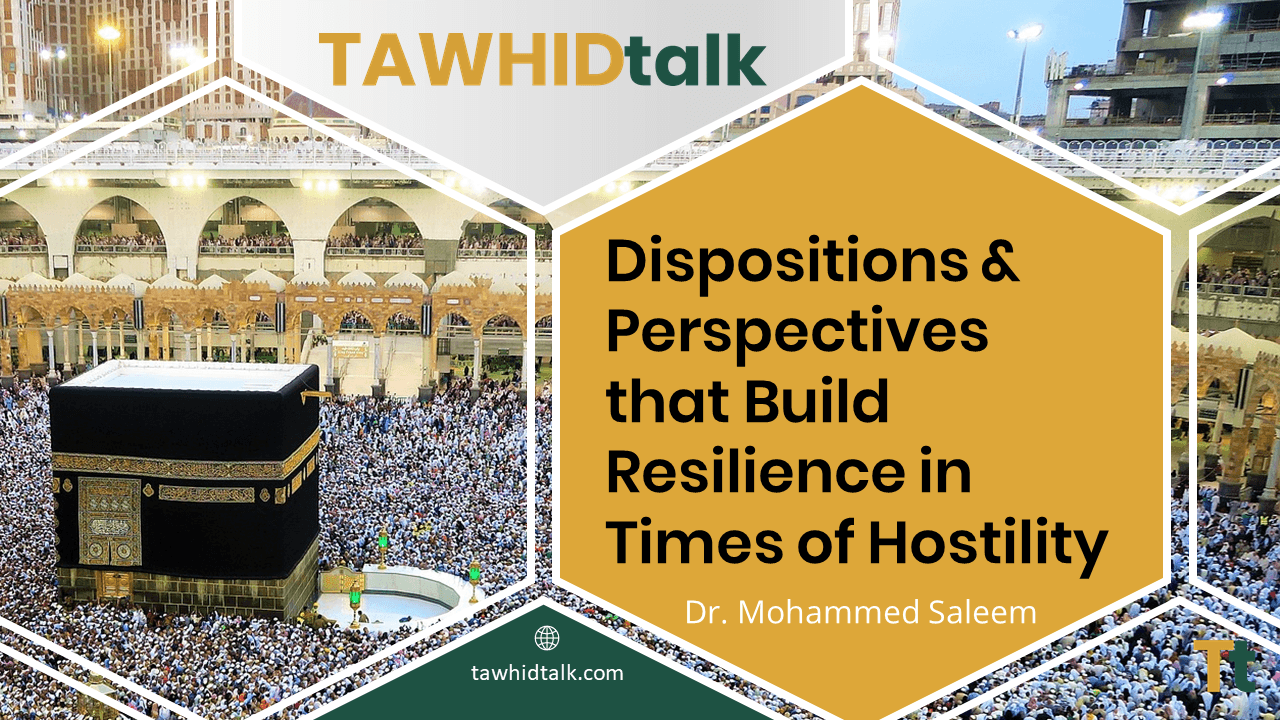
How do we help ourselves and our children remain steadfast when we encounter Islamophobia, prejudice, and hostility because of our Muslim identity? How can we ensure that difficult experiences do not weaken our resolve, distort our understanding of reality, or lead us to feel helpless?
This introductory video explores how our Islamic worldview, rooted in Tawḥīd and guided by the Qur’an and Sunnah, shapes our dispositions, perspectives, and actions. Drawing on the example of the Prophet Muhammad ﷺ and the powerful message of Surah Ad-Duḥā, the video highlights how our faith can help us maintain the right perspective, recognize that Allah has not abandoned us, and continue doing what is right despite the challenges we face.
This video introduces a series on building resilience through an Islamic worldview, not by ignoring the difficulties around us, but by learning to understand and respond to them through the guidance in the Qur’an and Sunnah.
Recommendation for Parents
If your children are in Grade 4 or above, consider watching this video together and using it as an opportunity to discuss how we respond to prejudice, how our beliefs shape our outlook, and how we can remain hopeful and steadfast in challenging circumstances. You do not need to have all the answers. Sometimes, the most valuable thing we can offer our children is a safe space to ask questions, express their concerns, and reflect on the guidance of the Qur’an together.
For younger children, the discussion questions below can help introduce some of these ideas in an age-appropriate way, without requiring them to watch the entire video.
Guiding Questions for Family Discussion
Use the questions that best suit your child’s age, maturity, and experiences. You do not need to cover them all in one sitting. Allow the conversation to develop naturally, and reassure your children that they can share their feelings honestly.
Grades 1–3: Building a Foundation of Faith and Hope
Focus on helping children understand that Allah cares for us, that difficult experiences do not define us, and that we can always try to do what is right.
- Who is Allah, and how does Allah take care of us?
- How might you feel if someone said something unkind about you or your Muslim identity?
- What can you do when you feel sad, worried, or afraid?
- Does someone else’s unkind behavior mean that you should stop being kind? Why or why not?
- In Surah Ad-Duḥā, Allah reminds the Prophet ﷺ that He had not abandoned him. What does this teach us about Allah?
- What is one good thing you can do when someone treats you unfairly?
A simple takeaway: Even when life is difficult, we can turn to Allah, seek help from trusted adults, and continue trying to do what is right.
Grades 4–6: Understanding Our Perspectives and Responses
Encourage children to reflect on how their beliefs influence the way they interpret experiences and decide what to do next.
- How can two people experience the same situation but respond differently?
- If someone makes an unfair comment about Muslims, how might that experience affect the way a Muslim child feels about themselves or others?
- What does it mean to feel helpless? Can you think of a time when someone might give up even though there are still things they can do?
- How does remembering Allah and reflecting on the Qur’an help us see a difficult situation differently?
- What can we learn from Surah Ad-Duḥā about responding to discouragement and the feeling of being abandoned?
- What are some constructive things we can do when we experience or witness anti-Muslim prejudice?
A simple takeaway: We may not control how others treat us, but with Allah’s guidance, we can work on how we understand our experiences and how we respond to them.
Grades 7 and Above: Developing a Resilient Islamic Worldview
Invite older children and teens to examine their assumptions, explore the relationship between faith and action, and consider how resilience can translate into meaningful responses to injustice.
- How does a person’s worldview shape their interpretation of events? How might an Islamic worldview change the way we understand hostility or rejection?
- The video discusses how repeated negative experiences can lead to learned helplessness. How might this affect a young Muslim’s confidence, identity, or willingness to act?
- What is the difference between acknowledging an injustice and allowing that injustice to define how we see ourselves, our future, or our relationship with Allah?
- How does Surah Ad-Duḥā challenge the assumption that present hardship means Allah has abandoned us?
- The video connects īmān, intentions, dispositions, perspectives, and actions. How do these influence one another? Can you think of an example from everyday life?
- What does it mean to trust that Allah is in control while still taking practical steps to address injustice?
- How can Muslims respond to Islamophobia in ways that are principled, courageous, wise, and consistent with the Qur’an and Sunnah?
- How can we distinguish between a realistic assessment of a difficult situation and a perspective that leads us to unnecessary hopelessness?
- What role can individuals, families, schools, and communities play in helping young Muslims develop resilience without minimizing their experiences?
- After watching this video, is there a perspective or disposition you would like to strengthen in your own life? What practical action could help you do so?
A simple takeaway: Resilience is not passive acceptance of injustice. It is the ability to remain grounded in faith, maintain a sound perspective, and continue taking principled action even when the path is difficult.
A Final Reflection for Parents & Educators
As parents and educators, we have an important role in helping our children develop more than the ability to cope with difficult circumstances. We want them to develop an Islamic worldview that helps them understand those circumstances, recognize their responsibilities, and respond with faith, wisdom, and courage.
The goal is not to shield our children from every difficult reality, nor to burden them with fears that are not theirs to carry. Rather, it is to equip them with the guidance of the Qur’an and Sunnah so that they can navigate life’s challenges with confidence in Allah, a clear sense of purpose, and a commitment to doing what is right despite the circumstances.
May Allah grant us and our children steadfastness (istiqāmah), strengthen our īmān, and guide us to respond to every challenge in ways that please Him.
Āmīn.

Leave a Reply